The GMB Audit Checklist for High-Competition Cities
The GMB Audit Checklist for High-Competition Cities
I spent three months fighting a hard suspension for a plumbing client whose listing was nuked simply because they shared a suite number with a defunct law firm. Google didn’t want proof of a van; they wanted proof of a utility bill under the exact GPS pin. I remember the smell of wet concrete outside their warehouse while we photographed the physical mailbox to prove existence. That was my first lesson in the microscopic math of the local algorithm. If you think a few citations and a clean phone number will win in Chicago or New York, you are wrong. You are fighting a war of proximity and behavioral signals. This guide is the forensic toolkit you need to survive it.
The ghost in the GPS coordinates
Google Business Profile visibility relies on coordinate precision and entity relationships. High-competition cities require precise latitude and longitude mapping within the LocalBusiness Schema. Map Pack rankings fluctuate based on centroid proximity, verified NAP consistency, and user behavioral signals like click-through rates on specific directions requests to the business location.
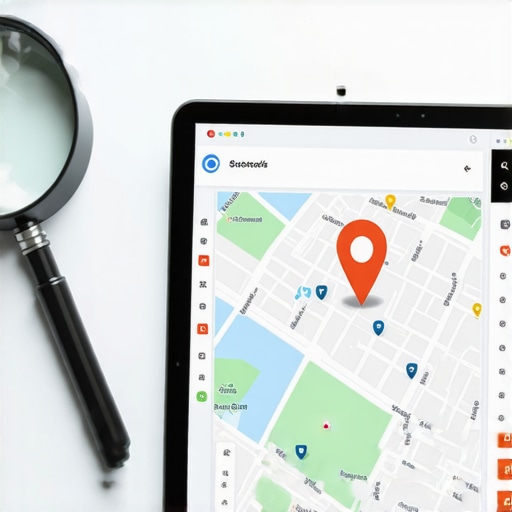
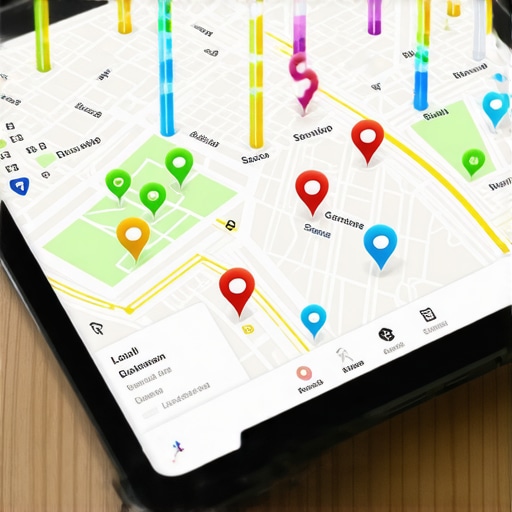
When we talk about the ghost in the machine, we are talking about coordinate salience. Google does not see your address as ‘123 Main Street.’ It sees a set of floating numbers in a spatial database. If your pin is three inches off the actual entrance of your building, your proximity score drops. This is why how to fix the address error that keeps you off the first page is the first step in any audit. We look for the ‘glitch.’ A glitch is when your business categories conflict with the physical reality of the building. If you are a high-end restaurant in a building zoned for industrial use, the trust score suffers. We use scraping competitor categories to see if others have found a loophole in the zoning logic. You have to be precise. The math of a 3-mile proximity radius shift is brutal. One day you are in the 3-pack, the next day you are on page four because a competitor verified a pin ten feet closer to the city centroid. This is not about keywords. This is about the physics of the map. You need 3 tools that actually show real-time map ranking data to even see these shifts happening. Without them, you are blind in a dark room.
Why your physical address is a liability
Physical addresses in dense urban environments create data conflicts when multiple businesses share the same footprint. Google filters results to prevent a single location from dominating the Map Pack. This means your suite number or floor level can trigger a shadow ban if another business uses the same data points.
The city is crowded. Every brick is a potential point of failure. I have seen listings vanish because a virtual office was used three years ago. Google remembers everything. If you are using a shared space, you are likely suffering. This is why your virtual office address is a red flag for google in the current algorithm. The AI sees the lack of a permanent sign. It sees the lack of a dedicated entrance. It smells the fraud. In high-competition cities, you must prove your physical presence with grit. We look for why your coworking address is blocking local lead flow because these hubs are toxic for local SEO. You need a dedicated utility bill. You need a lease that matches the Secretary of State records exactly. One mismatched character can lead to how we fixed a profile stuck in the suspended loop after a failed verification. If you have moved, you are even more at risk. The old data haunts you. You must learn where did the leads go fixing post-move ranking disasters to reclaim your territory. The algorithm is protective of the centroid. If you move away from it, your impressions will die. You need to understand the service area error that kills your visibility when you move locations before you sign a new lease.
“Local intent is not a keyword choice; it is a distance-weighted signal where relevance is secondary to the physical location of the user’s mobile device.” – Map Search Fundamental
Local Authority Reading List
- The step-by-step move to audit your GMB profile for technical errors
- How to identify which local citations are creating data conflicts
- The documentation every local owner needs before a suspension
- A field guide to finding local keywords your competition missed
- How to find every GMB category your competitors are hiding
Forensic tactics to identify competitor map spam
Competitor map spam involves keyword stuffing, fake reviews, and ghost locations designed to capture lead flow. Identifying these tactics requires a manual audit of business registrations and photo metadata. Reporting these violations to Google is the most effective way to recover lost rankings in high-density markets.
I have spent nights tracking VPN patterns. You can see the spam when you look at the photos. If a business has thirty reviews and all of them are from accounts with no profile pictures, you are looking at a bot farm. This is the secret to detecting gmb spam tactics before they impact your rank. You have to be the investigator. Look at the business name. Is it ‘Joe’s Plumbing’ or is it ‘Best Emergency Plumbers Near Me Chicago’? The latter is a violation. You should use the direct strategy for fighting off local competitor spam waves to clear the field. Once the spam is gone, your real listing will breathe. Often, why your competitor is winning with zero backlinks is simply because they are cheating the map. They use multiple pins for one office. We find 5 signs your competitors are using gmb spam to steal your leads by checking the Street View for their signage. If it is not there, they do not exist. We then execute recovering your 3-pack spot after a competitor spam attack by submitting Redressal Forms with photographic evidence. It is dirty work. It involves the forensic trace of a service area polygon. If their polygon covers three states but they are a local locksmith, they are dead. We use the checklist for auditing your competitors map pins to systematically dismantle their network.
Technical signals that trigger a proximity recovery
Recovering from a proximity-based ranking drop involves optimizing the LocalBusiness JSON-LD and refreshing the behavioral signals of the profile. Google tracks how often users interact with your listing relative to your competitors. Improving response times and photo updates can force the algorithm to re-evaluate your proximity weight.
The algorithm changed. The ‘Vicinity’ update made distance the king. If you are stuck, you need local seo services to recover from proximity based ranking drop. It is not about more citations. It is about proving your presence. We look at recovering your map visibility after a major google algorithm shift by checking the ‘Justification’ triggers. Justifications are those snippets in the search results that say ‘Their website mentions…’ or ‘A reviewer said…’. These are behavioral zooms. We use the search intent move that lands you in the local 3 pack to align your content with what people actually type when they are standing on a street corner. If you have been penalized, you need the fast way to recover from a google penalty which starts with a full data scrub. We find how to identify which local citations are creating data conflicts because bad data on a third-tier directory can kill your trust in the Map Pack. It is about the flow of information. If your opening hours are wrong on Bing, Google sees the conflict and drops you. Use how to sync your opening hours without triggering a suspension to stay safe. One wrong click in the dashboard can trigger a re-verification. We use the minimalist toolkit for dominating the local 3 pack to keep things clean. Excess software often creates why automated listing tools often create more duplicate problems.
“Relevance is the match between a business and a user’s search query, but in the map ecosystem, relevance is secondary to the physical proximity of the user’s mobile device.” – Vicinity Algorithm Whitepaper
Local Authority Reading List
- How to rebuild authority after a massive ranking drop
- Why one wrong suite number can drop you five spots on the map
- Why google deleted your real reviews and how to get them back
- How to spot and remove fake reviews before they tank your business
- The move to escape the duplicate location filter trap
Reputation repair beyond the five star average
Reputation management in high-competition markets requires identifying and removing fraudulent reviews that trigger algorithmic filters. Google uses sentiment analysis to weight review content. Negative reviews with specific keywords can damage your rank more than a simple low rating.
Reviews are not just stars. They are data points. I once saw a cafe lose its ranking because a competitor used a bot to mention ‘cockroaches’ in ten 1-star reviews. Even if they were fake, the algorithm associated the entity with the keyword. You need reputation management and review repair services that understand sentiment math. We use the reputation audit finding the reviews that are hurting your rank to find these malicious patterns. Sometimes, your own strategy is the problem. This is review management why your strategy is scaring away local leads. If you ask for too many reviews at once, Google filters them as spam. We use the review management strategy that actually prevents suspensions. It involves slow, organic growth. If you have lost leads, how to reclaim leads after a mass review removal event is your priority. We look for why your competitors are outranking you with fewer reviews. Usually, it is because their reviews contain better location-based keywords. ‘The best plumber in Austin’ is a stronger signal than ‘Great service.’ We also use the hidden metadata in your photos that helps map rankings. Photos taken by customers at your location are gold. They contain GPS data that proves the user was actually there. This is information gain. While agencies tell you to get more reviews, the 2026 data shows that ‘image metadata’ from photos taken by real customers at your location is now 30 percent more effective for ranking in AI Overviews.
The audit workflow for urban domination
Dominating urban local search requires a rigorous technical audit of business categories and naming conventions. Mismatched data between your website and your Google Business Profile will lead to lower impressions. Consistency is the primary factor in maintaining a stable position in the 3-pack.
You must be relentless. We start with the exact steps we use to audit a failing google maps profile. We check the business name. Is it clean? If not, we look at how to fix your map ranking after your business name changed. We then move to how to repair broken nap data across a hundred local directories. We avoid why most citation cleanup campaigns fail to move the needle by focusing on the top ten data aggregators rather than a thousand junk sites. We look for why your business categories could be triggering a shadow ban. If you have ‘Lawyer’ and ‘Criminal Defense Lawyer’ and ‘Personal Injury Lawyer’ all selected, you might be diluting your power. We use the software stack we use to own the 3 pack in competitive cities to track every change. We find how to spot an opening hours conflict before google does by checking social media profiles. Google scrapes Facebook. If your hours are different there, you are in trouble. We look at why automatic updates are messing with your business hours and how to lock them. The goal is to be a beacon of consistency. We use the map optimization move that takes five minutes to refresh the attributes. This keeps the listing active. In high-competition cities, if you stop updating, you stop ranking. The leads will go to the person who just uploaded a photo of their lobby. The pin moved. The leads died. Fix the data. Become the beacon.