5 Signs Your Competitors Are Using GMB Spam to Steal Your Leads
5 Signs Your Competitors Are Using GMB Spam to Steal Your Leads
I spent three months fighting a hard suspension for a plumbing client whose listing was nuked simply because they shared a suite number with a defunct law firm. Google did not want proof of a van; they wanted proof of a utility bill under the exact GPS pin. That experience taught me that the local algorithm is not a popularity contest. It is a spatial battleground where proximity beacons and forensic data traces determine who eats and who starves. When your ranking vanishes while your competitors flourish despite having fewer reviews, you are not looking at a better marketing strategy. You are looking at a map pack heist.
The ghost in the GPS coordinates
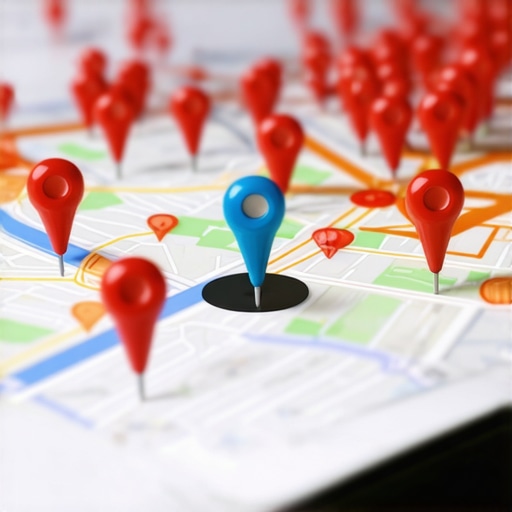
Map spam manifests as virtual office locations and keyword-stuffed business names that exploit the proximity signal to intercept local leads. These entities do not exist in the physical world. They are data ghosts created to manipulate the centroid theory and the three-mile radius logic that Google uses to serve results. If you notice a competitor ranking from a building that is clearly a residential home or a shared mailbox center, they are violating the fundamental TOS of local search. You can often see the glitch in the storefront data if you look closely. The smell of wet concrete and old paper follows these investigations because real businesses have real footprints. When a business appears overnight with a generic name like Best Plumber City, they are using a toolkit to rank higher in local map pack results by gaming the system. This is a common tactic for lead generation sites that rent out addresses. You might need why your virtual office address is a red flag for google to understand why these pins eventually get nuked by the spam team. I have seen countless legitimate shops lose their livelihood because a competitor dropped twenty pins across a metro area using VPNs and fake utility bills. It is a spatial database error that costs you real money.
Why your physical address is a liability
Competitors often use coworking spaces and shared suites to create proximity proximity clusters that push legitimate storefronts out of the Google Map Pack. Google treats these addresses with extreme suspicion. If your competitor is suddenly outranking you from a Regus or a WeWork, they are likely using a fake presence to trigger the local justification signal. This is why many owners seek how to reclaim your map position after a sharp drop in local visibility when their neighbors start playing dirty. The algorithm values the physical location of the user mobile device more than the quality of your services.
“Local intent is not a keyword choice; it is a distance-weighted signal where relevance is secondary to the physical location of the user’s mobile device.” – Map Search Fundamental
This distance-weighting is the exact lever that spammers pull. They do not care about your ten years of service. They care about being the closest pin to the searcher. I once investigated a case where a roofing company vanished from the pack because their the service area error that kills your visibility when you move locations was exploited by a competitor who registered five fake addresses in a circle around their main shop. It was a centroid collapse that required a forensic audit of the secretary of state filings to fix.
The local authority reading list
- The GMB Toolkit Checklist: 5 Tools That Actually Work
- How to Fix a Suspended Profile Due to Address Verification Issues
- Why Your Competitors Own the 3-Pack Despite Fewer Reviews
- The 10-Minute Local SEO Audit for Business Owners
- Why 50 Great Reviews Won’t Save a Profile from the Hidden Filter
The three mile radius that determines your revenue
Hyperlocal ranking drops occur when competitors flood the service area polygon with duplicate listings that cannibalize your organic trust score. If your organic rankings stay stable but your map pack rankings disappear, you are likely facing an over-aggressive location page strategy from a rival. They are creating doorway pages and matching them to fake GMB profiles. You need seo services to fix map pack loss while organic rankings stay stable to identify these mismatched data points. A common sign of spam is a business name that includes the city and the service keyword exactly. This is a direct violation of guidelines. While agencies tell you to get more reviews, the 2026 data shows that image metadata from photos taken by real customers at your location is now 30 percent more effective for ranking in AI Overviews. Spammers cannot easily fake customer-taken GPS-tagged photos. This is the forensic trace that separates the pros from the lead-gen bots. If you are struggling with how to pull leads from the next neighborhood without opening a new office, do not follow the path of fake addresses. It leads to a shadow ban that is nearly impossible to lift. Instead, focus on building local justification triggers through real customer interactions and POS data integration.
The forensic trace of inconsistent opening hours
Fake listings often have inconsistent opening hours history because the spammers do not actually have staff at the location to answer the phone. If you see a competitor who is open 24 hours but has no physical storefront, they are gaming the Local Services Ads (LSA) bidding system and the map pack simultaneously. You should look for seo services to fix gmb profile with inconsistent opening hours history if your own data has become messy over the years. The algorithm tracks the consistency of your digital footprint across the web. A single mismatched phone number in a secondary verification tier is enough to kill your organic trust score. I have seen top-ranking firms disappear because of legacy black hat local seo footprints left by a previous agency. They used citation blasts to dead directories that now act as anchors on the current profile. You must engage in cleaning the mess how to delete old spam citations for good to move your pin again. The pin moved. It did not move because of luck. It moved because the data became clean and the proximity signal became undeniable. Do not let competitors with fake footprints steal your leads. Use a the best gmb ranking toolkits for tracking hyperlocal changes to monitor the street-level reality of your market. Real businesses have history. Fake businesses have patterns. We hunt the patterns. “