The Secret to Detecting GMB Spam Tactics Before They Impact Your Rank
The Secret to Detecting GMB Spam Tactics Before They Impact Your Rank
I smell the sharp scent of diesel and stale office coffee every time I open a service area map. To me, a Google Business Profile is not just a listing; it is a unit in a massive logistics fleet. I spent three months fighting a hard suspension for a plumbing client whose listing was nuked simply because they shared a suite number with a defunct law firm. Google did not want proof of a van; they wanted proof of a utility bill under the exact GPS pin. That experience taught me that the map is a spatial database where trust is the only currency that does not fluctuate. When you are managing a dispatch of thirty technicians across four counties, you realize that a single map-spam attack can halt your entire revenue stream. I have seen legitimate businesses vanish because a lead gen network moved into their zip code with a hundred fake pins. Detecting these tactics before they anchor your visibility is the difference between a thriving fleet and a yard full of idle trucks.
The ghost in the GPS coordinates
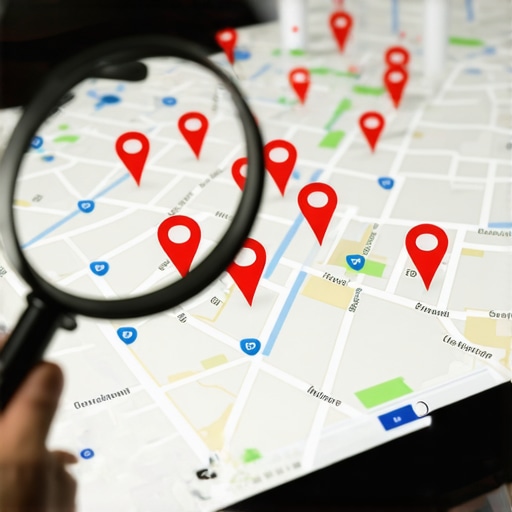
Spam detection in the Map Pack requires monitoring the centroid shift and tracking the emergence of virtual office clusters. You must audit the latitude and longitude of competitors to find duplicate address footprints. Identifying keyword-stuffed business names and fake review patterns allows you to report Google Business Profile violations before they trigger a local algorithm filter that suppresses your legitimate shop.
The map algorithm operates on a proximity weighted logic that favors the physical location of the user. When a spammer creates a circle of fake listings around your office, they are effectively building a wall of noise that the Google bot cannot always see through. This is why you need to understand the proximity signal error that keeps your shop hidden from nearby customers. If your coordinates are not generating a high enough salience score, you will find your pin pushed to the second or third page. I look at the map as a dispatch grid. If there are five businesses claiming to be in the same small office building without unique suite numbers, the logistics of that location fail. Google knows this. They use computer vision to scan storefronts and street views. If the sign on the building does not match the name on the digital pin, the trust score drops. You should look into why your storefront listing isn’t showing up for local searches if you suspect a proximity conflict is stalling your growth.
“Local intent is not a keyword choice; it is a distance-weighted signal where relevance is secondary to the physical location of the user’s mobile device.” – Map Search Fundamental
Why your physical address is a liability
Using a virtual office or a coworking space creates a high risk of profile suspension and ranking suppression. Google tracks shared business addresses and commercial mail receiving agencies (CMRA) to identify low-trust locations. Legitimate shops must provide physical storefront evidence or service area verification to avoid being flagged by the GMB spam filter during a location verification update.
I have managed logistics for service companies that tried to expand too fast by renting desk space in every neighboring city. It never works. The algorithm sees the coworking address as a red flag because it lacks the behavioral signals of a real business, such as unique utility bill history and consistent Wi-Fi MAC address pings. If you are struggling with this, you need to understand why your virtual office address is a red flag for google. The system is designed to verify that a human is actually at that location. This is why proving your physical address a guide for suspended profiles is the most requested manual for my teams. When you use a fake address, you are not just cheating the system; you are creating a logistics nightmare that will eventually lead to a hard suspension. Once that happens, the road back is long and expensive. You will likely need how to fix a suspended profile due to address verification issues to get your fleet back on the map.
The three mile radius that determines your revenue
Proximity is the strongest ranking factor in the local search algorithm and controls the visibility of your business pin. Your primary category relevance and NAP consistency dictate how far your search visibility extends from your physical office. Monitoring competitor proximity shifts and local search results pages (SERPs) is necessary for maintaining a top three map pack position in high-density markets.
The three mile radius is the heart of the logistics engine. If a customer is four miles away and a spammer has dropped a fake pin two miles from them, you lose the lead. It is cold math. You need to know why competitors further away are stealing your local lead flow. Sometimes it is not about distance, but about the density of the keywords in their business name, which is a direct violation of terms. If you see a competitor named ‘Plumber Near Me City Name Best Price,’ they are gaming the system. This creates a rollercoaster of visibility for honest owners. I recommend reading about how to stabilize your map position when rankings feel like a rollercoaster. The algorithm is trying to find the most convenient and trustworthy solution for the user. If you can prove your physical presence through high-quality image metadata and real customer check-ins, you can often beat the spammers who are operating from a distance. You should learn how to pull leads from the next neighborhood without opening a new office by using local content instead of fake pins.
Local Authority Reading List
- Surviving the 2026 Google Maps Update
- Essential GMB Ranking Toolkit
- Cleaning Up Citation Spam Guide
- Fixing Rankings After Name Changes
- Service Area Move Errors
Hunting the invisible lead gen networks
Identifying lead generation networks requires auditing the phone numbers and website domains of suspicious map listings. These networks use mass-produced citations and call tracking numbers to dominate the local map pack with duplicate business entities. Reporting these spammy lead gen listings is the only way to rebuild trust and recover your organic ranking in a competitive niche.
Lead gen networks are like ghost fleets; they look like a business but they have no trucks and no technicians. They are just digital shells designed to capture your calls and sell them back to you. I have spent years as an investigator tracking these patterns. They often use the same template for their websites and the same stock photos. If you find a listing that has no team photos and a generic description, it is likely a shell. You can use 5 signs your competitors are using gmb spam to steal your leads to identify them. Once you find them, you must be aggressive in reporting them. This is part of a larger the direct strategy for fighting off local competitor spam waves. If you do not clean up the map, your honest business will be buried under a mountain of fake data. I have seen companies use how to wipe out duplicate profiles that are cannibalizing your map leads to reclaim thirty percent of their lost traffic in a single month.
“Verification is the gatekeeper of proximity. Without a verified physical footprint, the algorithm defaults to the lowest trust tier regardless of review count.” – Local Intelligence Whitepaper
The math of local review sentiment
Review sentiment analysis uses natural language processing to verify the authenticity of customer feedback and business location. Google detects fake review attacks by looking for VPN IP addresses and irregular review velocity from accounts with no local history. Managing your reputation score through verified customer photos is essential for map pack authority and search ranking stability.
Reviews are the fuel for your ranking, but fake fuel will blow up your engine. I once saw a cafe owner lose everything because a competitor dropped twenty 1-star reviews in an hour using a VPN. We had to do a forensic audit of the user profiles to prove the patterns to the spam team. It was a brutal fight. If you are in that situation, you need a the mass review removal survival plan for local business. Google is getting better at spotting these, but they still make mistakes. Sometimes they delete your real reviews by accident. You should know recovering from a competitor attack that removed your reviews is possible if you have the right documentation. The math shows that a high volume of reviews without text or photos is less valuable than five reviews with geotagged images. This is why why 50 great reviews wont save a profile from the hidden filter if your behavioral signals are missing.
The tools for the hyper local architect
Utilizing a specialized GMB ranking toolkit provides real-time data on local search positions and citation health. These tools allow you to audit business profiles for information gain signals and track local map rankings across a hyper-local grid. Using manual optimization tactics alongside automated listing software ensures your NAP data remains consistent across all niche directories.
You cannot manage a fleet without a GPS tracking system. In the same way, you cannot manage local SEO without a the gmb toolkit checklist 5 tools that actually work. Most generic rank trackers are useless for map pins because they do not account for the user’s specific street corner. You need 3 tools that actually show real-time map ranking data to see what is really happening. If you rely on a single report from a national tool, you are flying blind. I use the best gmb ranking toolkits for tracking hyperlocal changes to see if a spammer has moved into a specific neighborhood. This allows my team to adjust our bidding and content strategy in real time. It is about logistics. If the data is wrong, the dispatch is wrong. You must avoid the listing software trap why more citations arent always better and focus on the quality of the signals you are sending to the engine.