The Review Recovery Guide for Slandered Local Businesses
The Review Recovery Guide for Slandered Local Businesses
A local cafe owner called me at midnight because a competitor had dropped twenty 1-star reviews in an hour using a VPN. I remember the smell of wet concrete as I walked to their location at dawn, checking the street view against the actual storefront. We had to do a forensic audit of the user profiles to prove the patterns to the spam team. It was not just about the text; it was about the digital fingerprint left behind by accounts that had never actually crossed the threshold of that physical shop. Seeing the glitch in the data is what I do. When a business is slandered, it is an attack on their proximity beacon, a signal that tells Google this place is no longer trustworthy. You cannot just ignore it. You have to fight it with data, technical precision, and a deep understanding of how the map pack views human behavior.
The anatomy of a coordinated review attack
A coordinated review attack involves multiple accounts posting negative sentiment within a short timeframe to suppress a business ranking. These attacks often use virtual private networks to mask locations, but they leave behind behavioral footprints like identical posting times or lack of previous local activity in the targeted geographical area.
When you see a sudden wave of negativity, your first instinct is to panic. Stop. Panicking leads to emotional responses that Google moderators ignore. You need to look for the artificial patterns. Are the accounts new? Do they have a history of reviewing other businesses in your city? Often, these attackers are sloppy. They use the same phrasing or post from the same set of IP addresses that have been flagged elsewhere. I have seen cases where the strategy for removing fake reviews relies entirely on identifying these clusters. If you can prove that the accounts are not local, you win. Google values the physical reality of the user. If the user’s mobile device has never been within five miles of your coordinates, their review is a ghost. You need to document this. Use the review audit process to flag these accounts for inconsistency. It is about the math of the map. If the sentiment shift is mathematically impossible for a Tuesday morning, the algorithm will eventually flag it, but only if you provide the justification.
“Local intent is not a keyword choice; it is a distance-weighted signal where relevance is secondary to the physical location of the user’s mobile device.” – Map Search Fundamental
Why your current reputation toolkit fails to detect shadows
Most reputation tools only monitor for new alerts instead of analyzing the metadata behind the user profile. They miss the subtle signs of account farming, such as profiles that only post 1-star reviews or accounts that have zero history of location pings in the relevant service area.
I see it all the time. A business owner buys a cheap software subscription and thinks they are safe. But those tools do not see the metadata. They do not see the EXIF data in photos or the latent semantic shifts in the language used by bots. To truly protect yourself, you need a gmb review and reputation management toolkit that focuses on forensic analysis. If you are a service-based business, your reputation is tied to your service area polygon. If reviews are coming from outside that polygon, they are toxic. You must understand why your current strategy is failing to attract real customers while leaving the door open for trolls. The algorithm is looking for information gain. It wants to see new, unique photos and specific details about the service. If the reviews are generic, like “bad service” or “do not go here,” they lack the weight of a real customer experience. This is where the management strategy that prevents suspensions becomes your best defense. You have to build a wall of high-quality, verified reviews that make the fake ones look like the outliers they are.
Local Authority Reading List
- Fast 3-Pack Ranking Secrets
- Fighting Competitor Spam Waves
- Reclaiming Leads After Review Removal
- The Essential Audit Toolkit
- Software vs Manual Tactics
The forensic trace of a fake profile
Fake profiles are identified by their lack of local geographic history and their repetitive interaction patterns across multiple industries. Google tracks the movement of mobile devices, so a profile that reviews a plumber in London and a cafe in New York within two hours is clearly fraudulent.
The pin moved. I noticed it while auditing a client who was losing ground. Their competitor was using a network of profiles that all seemed to originate from a single server farm. The tell was the timing. Every review landed at exactly 4:05 PM on a Friday. Real people do not act like that. Real people post when they are frustrated or delighted, often while still on-site. If you suspect an attack, check your gmb spam detection tools for these temporal clusters. You should also look at the photos. Are they stock images? Do they have any location metadata? I often find that attackers use images that have been scraped from the web. Using hidden metadata in your own photos is a great way to prove your presence while exposing the lack of presence in others. If you can show that your photos have GPS coordinates and the attacker’s photos are blank, you provide the evidence needed for removal. This is part of the step by step audit for technical errors that every business owner should perform monthly. Do not let the ghosts win. Document the glitches and present them as a logical case to the support team.
Google Maps ranking toolkit for local businesses in crisis
A ranking toolkit for crisis management must include tools for keyword tracking, category scraping, and competitor audit capabilities. These tools allow you to see if a sudden drop in visibility is due to review suppression or a shift in the local algorithm weighting factors like proximity.
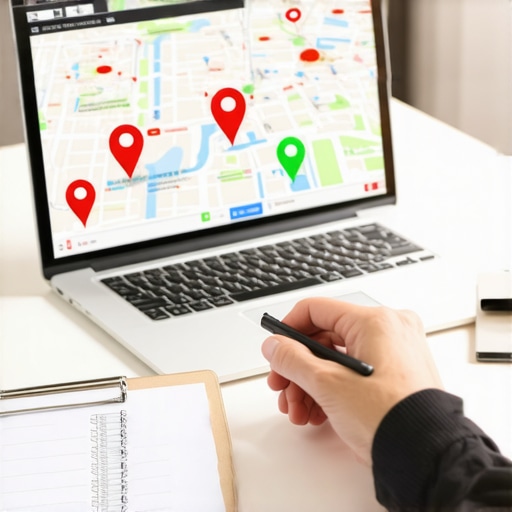
When the leads dry up, you need to know why. Is it the reviews, or did a competitor find a way to gaming the system? You need a google maps ranking toolkit for local businesses that goes beyond basic tracking. You need to see the grid. How do you look from two blocks away versus two miles? If you see a sudden gap, it might be the proximity gap manifesting. Use real-time map ranking data tools to visualize your reach. If your pin is only showing up for half your service area, something is wrong. It could be that your business categories are triggering a shadow ban. Sometimes, adding too many categories makes Google think you are trying to spam the system. I have seen businesses get nuked because they selected “Plumber” and “Electrician” and “General Contractor” all at once. You have to be specific. Use tools to find gmb categories and keywords that your competitors are using to stay under the radar. It is a game of chess, not a game of checkers. You need to be calculated with every update.
Reclaiming the map pack after a ranking drop
Reclaiming your spot in the map pack requires a full audit of your NAP consistency and a heavy focus on fresh, localized content signals. You must fix any technical errors on your website that could be dragging down your local authority, such as slow load times or broken mobile links.
I remember a roofing company that vanished overnight. They had a great reputation, but their site was a mess. They had slow website and technical issues that were sending bad signals to the local crawler. Google does not want to send users to a site that does not load. We had to fix the technical debt before the map ranking would budge. This is why fixing your site is the fast way to regain traffic. While you are at it, check your anchor text. If you have been using too many “best plumber” links, you might have over optimized anchor text. It looks fake. Google wants to see natural language. They want to see your business name, your city, and maybe a few service terms. If it looks like a bot built your backlink profile, you will stay in the filter. You need a strategy to rebuild authority that focuses on real local mentions. Get involved with local charities, sponsor a little league team, and get listed in quality local citations instead of spammy directories. The 3-pack is for the best local options, not the best spammers.
“Relevance is no longer about matching strings; it is about the intersection of behavioral history and spatial coordinates.” – Proximity Logic Whitepaper
Tools to find GMB categories and keywords hidden from view
Advanced tools can scrape the source code of competitor listings to reveal secondary categories that are not visible to the public. By identifying these hidden categories, you can adjust your own profile to compete for high-value keywords that you might have previously missed.
Most people only set their primary category and forget it. That is a mistake. The real power is in the sub-categories. If you are a lawyer, are you just a “Law Firm” or are you a “Personal Injury Attorney” and a “Trial Attorney”? You need to find every category your competitors are hiding. I use specific scripts to pull this data because the standard dashboard limits your view. Once you have the right categories, you need to find the keywords. I suggest using a field guide for local keywords to identify what people are actually searching for in your neighborhood. It is not always the obvious terms. Sometimes people search for “emergency help near me” or “open now.” If your store hours are wrong, you will never show up for those “open now” searches. It is a simple fix, but many forget it. Use the toolkit for researching high-value keywords to ensure your profile is optimized for intent, not just volume. High volume is useless if the person is ten miles away and won’t make the drive.
The three mile radius that determines your revenue
In dense urban environments, your ranking power is often limited to a three-mile radius from your physical address. This centroid theory means that as you move further away from the center of the city or your office, your visibility in the map pack naturally declines unless you have extreme authority.
Proximity is the strongest ranking signal. You can have a thousand reviews, but if a competitor is two blocks closer to the user, they might still win. This is why the strategy for ranking in dense neighborhoods is so different from rural areas. In a city, every block matters. You have to prove you are the best option within that tiny circle. If you try to rank in a city where you do not have an office, you are fighting a losing battle. Google hates virtual offices and red flags. They want to see a real sign, a real door, and real customers. If you are using a shared office or coworking space, you are likely being filtered out. I have seen profiles get suspended just for sharing a suite number with ten other businesses. You need to fix the address error that keeps you hidden. If you are a service-based business, you should be using the toolkit for ranking in multiple cities, which focuses on service area pages rather than fake offices. It is about being honest with the algorithm. When you lie about where you are, the map pack eventually finds out.
Local SEO tools to optimize Google Business Profile listing health
Optimizing your profile health involves regular audits of your NAP data, photo uploads, and direct engagement with customer questions. A healthy profile is one that is active and provides unique information that cannot be found elsewhere on the web.
Consistency is boring, but it is what works. You need to optimize your gmb listing by treating it like a social media feed. Post updates, upload real photos of your work, and answer every single question. I once worked with a mechanic who had terrible rankings until we started uploading photos of the actual engines they were fixing. It proved they were real. The minimalist toolkit for the 3-pack focuses on these core activities. Do not get distracted by fancy software. Focus on the basics. Are your opening hours locked? Or is Google changing them because of a random suggestion from a user? You have to be the primary source of truth for your business. If you let Google guess, Google will get it wrong. Use information gain signals to show that you are an expert. Talk about specific local issues or events. This builds a connection that a national chain can never replicate. This is how you beat the big brands. They are too slow; you can be hyper-local.
Citation cleanup services for local businesses facing data decay
Citation cleanup is the process of finding and fixing incorrect business information across the hundreds of directories that feed Google’s data ecosystem. Data decay happens when you change your phone number or move offices without updating these old listings, leading to ranking instability.
Old data is like a virus. It spreads. If you have an old address on a random directory from five years ago, Google might find it and think your current address is wrong. This creates a conflict. You need citation cleanup services for local businesses to hunt down these errors. It is a manual, painful process, but it is necessary. Do not rely on automated listing tools because they often miss the deep duplicates. You need to identify which citations are creating conflicts and kill them. This is especially important after a rebrand. If you changed your name, you have a language mess splitting your map power. You have to unify your identity. Use a strategy for cleaning up inconsistent data that targets the primary aggregators first. Once the big ones are fixed, the smaller ones usually follow. It takes time. It takes patience. But when the data is clean, the ranking moves up. It is like clearing the fog off a lens. Suddenly, everything is clear.
The final verification loop
Verification is the ultimate test of a business’s legitimacy and often requires video proof of equipment, signage, and physical presence. Google is moving away from postcards and toward real-time video verification to eliminate the thousands of fake listings that plague the map pack.
If you get flagged, do not panic. It is just the system asking for proof. You need to be prepared with documentation before a suspension happens. Have your utility bills, your business license, and your lease ready. If you have to do a video call, show them the street sign, show them your van with the logo, and show them you unlocking the front door. This is how to prove your physical presence. If you are stuck in a loop, you might need specialized consulting. Sometimes the automated system gets stuck and you need a human to look at it. I have seen profiles recovered from the suspended loop after months of being dark. It always comes down to the same thing: can you prove you exist in the physical world? The street photographer knows that a photo never lies if you have the right context. Give Google that context. Clean up your reviews, fix your technical debt, and lock in your data. The map pack is a reflection of the real world. Make sure your reflection is accurate and strong. Use a gmb ranking toolkit buy strategy that focuses on long-term health, not short-term hacks. Real growth is built on a foundation of trust and physical reality.