The Search Intent Move That Lands You in the Local 3-Pack
I spent three months fighting a hard suspension for a plumbing client whose listing was nuked simply because they shared a suite number with a defunct law firm. Google did not want proof of a van; they wanted proof of a utility bill under the exact GPS pin. This is the gritty reality of the modern Map Pack. It is not about keywords alone. It is about the forensic verification of physical existence within a spatial database. If your data smells like a digital rental, you are invisible. I view every business listing as a Proximity Beacon. If that beacon flickers because of inconsistent NAP data or a shared suite number, the algorithm treats it as noise. You must understand that the map is a dispatch system, not a directory. When a user searches for emergency plumbing, Google is calculating travel time, historical check-in data, and the mathematical weight of your service area polygon. If you fail the proximity test, no amount of backlinking saves you.
The ghost in the GPS coordinates
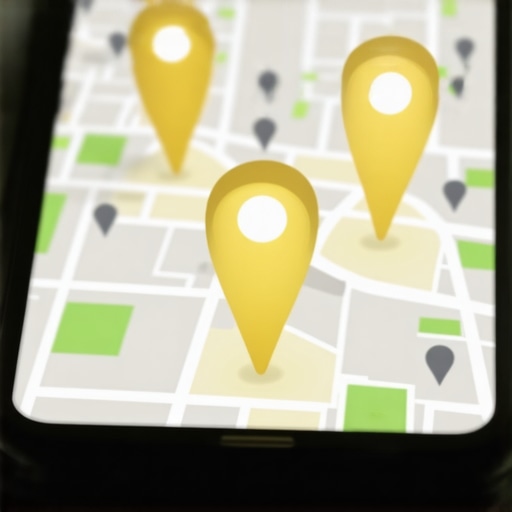
GPS coordinates and latitudinal precision are the foundation of Map Pack visibility and POI signals. When a mobile device triggers a search, the algorithm calculates the distance-weighted relevance of your Google Business Profile against the real-time location of the user to determine the Local 3-Pack winners.
Every business exists as a set of precise coordinates in the Google ecosystem. If your pin is even twenty feet off the actual entrance of your building, you create a data conflict. This is especially true in dense urban environments where multiple businesses occupy the same vertical space. I have seen rankings vanish because a business owner moved their pin to the street to be more visible, unwittingly triggering a proximity error. You need to verify your physical presence with high-resolution imagery. This is why the hidden metadata in your photos that helps map rankings is so vital. It provides a timestamped, geolocated proof of life that software cannot fake. When you upload a photo taken at your storefront, the EXIF data tells Google exactly where you are. This is a primary signal for the proximity signal error that keeps your shop hidden from nearby customers who are standing just blocks away.
Why your physical address is a liability
Physical addresses acting as business locations must be verified storefronts or legitimate service areas to avoid Google Business Profile suspensions. Using coworking spaces or virtual offices often triggers manual reviews and ranking drops due to address redundancy and spam filter triggers in the local algorithm.
The era of renting a desk to get a local pin is dead. Google knows the footprint of every Regus and WeWork in the country. If you are using one, you are likely being filtered out of the top results. Many owners ask why your coworking address is blocking local lead flow, and the answer is simple; Google wants to see a permanent sign and a dedicated entrance. If you share an address, you are competing for the same ‘centroid’ as everyone else in that building. This leads to how to fix a suspended profile due to address verification issues by providing lease agreements that show exclusive use of a suite. If you cannot prove you are the only one there, you will never own the 3-pack. For those who have already been flagged, you must follow proving your physical address a guide for suspended profiles to stand a chance at reinstatement. It is a forensic process. It requires utility bills, photos of the foyer, and sometimes a live video walk-through with a support agent who is looking for any reason to deny you.
“Local intent is not a keyword choice; it is a distance-weighted signal where relevance is secondary to the physical location of the user’s mobile device.” – Map Search Fundamental
The three mile radius that determines your revenue
Proximity radius and hyperlocal search intent dictate organic lead flow for service-based businesses and retail storefronts. A three-mile boundary often acts as the primary ranking zone where competitor density and user proximity influence map visibility more than traditional SEO metrics or domain authority.
If you are a contractor, you might wonder why your contractor profile only shows up in one zip code while your competitor covers the whole city. The secret is not more keywords. It is the history of your service workers’ mobile devices. Google tracks where your team goes. If your trucks never leave a specific neighborhood, Google will not rank you ten miles away. This is the heart of the proximity signal error. You are trying to rank for an area you do not actually serve. To expand, you need 7-hyperlocal content tactics that actually build authority in your neighborhood. This involves mentions of local landmarks, cross-streets, and community events. You can find these in 7-hyperlocal content tactics that actually build authority in your neighborhood. This builds a topical map that mirrors the physical map. If you are stuck, you might need emergency seo services for sudden ranking drop to audit your location signals. Often, a single bad piece of NAP data on a third-tier directory is anchoring your rank. You must learn how to identify which local citations are creating data conflicts before you spend another dollar on ads.
Local Authority Reading List
- Master Fast Maps Ranking: Proven Strategies for 2025 Success
- The Step-by-Step Move to Audit Your GMB Profile for Technical Errors
- The Best GMB Ranking Toolkits for Tracking Hyperlocal Changes
- The Difference Between a Software Fix and a Real Local SEO Strategy
- How to Recover Your Business Profile After a Fake Address Suspension
Mathematical weight of local review sentiment
Review sentiment and keyword-rich testimonials provide justification triggers that allow Google Maps to display relevant business profiles for long-tail queries. Analyzing review velocity and local guide status helps GMB optimization by proving user engagement and brand trust within a specific geographic area.
A review that says “Great service” is worth almost nothing. A review that says “The best emergency plumber in downtown Austin who arrived in 20 minutes to fix my burst pipe” is gold. This contains the service, the location, the intent, and the result. This is why why your reputation toolkit is failing to pull more reviews matters; if you are just asking for stars, you are missing the SEO data. You need review management why your strategy is scaring away local leads to understand the nuance of customer feedback. If you have been hit by a spam attack, look at recovering your 3-pack spot after a competitor spam attack. You must report reviews based on policy violations, not just because you dislike them. If you lose a chunk of reviews, follow the mass review removal survival plan for local business to rebuild your trust score. Google uses reviews to justify placing you in the top three. If the reviews disappear, the justification disappears. This is why why your competitors own the 3-pack despite fewer reviews is a common frustration. They have better keywords and higher sentiment scores in the reviews they do have.
The JSON-LD attributes that trigger voice search
JSON-LD Schema and LocalBusiness attributes provide structured data that search engine crawlers use to verify NAP consistency and operating hours. Implementing Schema.org markup ensures information gain signals are correctly interpreted by AI Overviews and voice assistants for local search queries.
Your website and your Google Business Profile must be perfectly synced. Any discrepancy in your opening hours can trigger a suspension. I have seen profiles get ghosted because the website said they closed at 5 PM but the map said 6 PM. Learn how to sync your opening hours without triggering a suspension immediately. This is part of a larger the 10-minute local seo audit for business owners who hate tech. You should also check for duplicate profiles. If you have two pins for the same shop, you are cannibalizing your own leads. Check how to wipe out duplicate profiles that are cannibalizing your map leads to consolidate your power. If you are a larger brand, you might be dealing with fixing brand confusion what to do when google merges your listings. This happens when Google thinks two separate businesses are one. It is a nightmare for rankings. You need seo services to fix brand confusion from merged gmb listings to untangle the data layers. Without clean schema and a clear brand identity, the algorithm will default to the competitor with the simplest, most verifiable data.
“Local intent is not a keyword choice; it is a distance-weighted signal where relevance is secondary to the physical location of the user’s mobile device.” – Map Search Fundamental
Recovering from the map ranking rollercoaster
Map ranking stability and visibility recovery require a forensic audit of legacy black hat footprints and citation inconsistencies. Correcting NAP data and category conflicts allows a business profile to regain trust scores after a sudden ranking drop or Google algorithm update.
If your rankings feel like a rollercoaster, you likely have inconsistent data. This is usually caused by how historic citation spam campaigns secretly anchor your ranking. Old SEO work from years ago might be coming back to haunt you. You need cleaning up years of citation spam without losing your rank to fix this. It involves reaching out to dead directories and demanding they update or delete your info. Many people turn to why automated listing tools often create more duplicate problems because they want a fast fix. Do not do it. Automated tools often create more mess than they solve. Instead, use a manual approach. Follow the exact steps we use to audit a failing google maps profile to find the root cause. If you have been hit by a recent shift, consult recovering your map visibility after a major google algorithm shift. It is often a matter of adjusting your categories. Choosing the wrong sub-category can sink you. See how choosing the wrong sub-category is sinking your local rank for a guide on how to pick the winners. You might need a gmb keyword and category research toolkit to find what your successful competitors are actually using behind the scenes.