The 3-Pack Strategy for Agencies Managing 50+ Locations
I spent three months fighting a hard suspension for a plumbing client whose listing was nuked simply because they shared a suite number with a defunct law firm. Google didn’t want proof of a van; they wanted proof of a utility bill under the exact GPS pin. This reality defines the current local search market. Managing 50 or more locations requires the mindset of a logistics manager overseeing a fleet of delivery trucks. Every location is a signal. Every address is a data point in a spatial database that values physical proof over digital fluff. If your agency is struggling with these invisible barriers, you need a logical approach to fixing a Google Business Profile suspension before you attempt any further scaling. The map pack is not a leaderboard. It is a dispatch system.
The ghost in the GPS coordinates
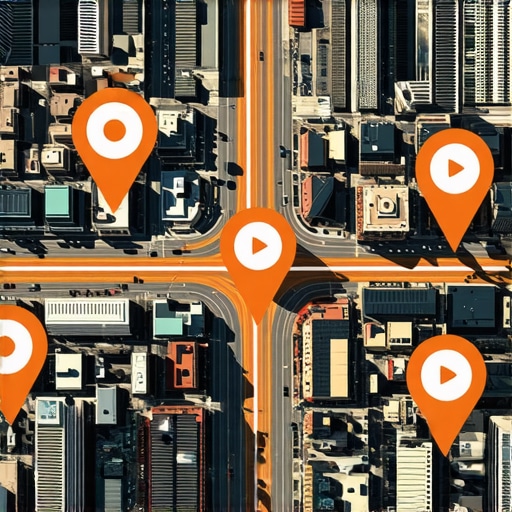
Winning the local 3-pack requires a mastery of proximity signals and spatial math. You must align your NAP data with the actual GPS coordinates of the storefront while ensuring that the business categories trigger the correct local justification signals in the Google search interface for each specific neighborhood. Proximity is the ultimate ranking factor. It overrides even the strongest backlink profiles if the user is standing 500 feet from a competitor storefront. When we talk about the ghost in the coordinates, we are discussing the way Google interpolates location. If your map pin is ten feet off the actual entrance, the algorithm might perceive your business as inaccessible. This micro-level data matters when you are scaling to 50 locations. You cannot afford a single mismatched digit. Agencies often ignore the fixing the disconnect between your website and your map pin protocol, which leads to immediate ranking drops. The algorithm looks for a 100 percent match between the latitudinal data in your website schema and the physical data held by the Google Business Profile (GBP). If there is a shift, the trust score collapses.
Why your physical address is a liability
A physical address becomes a liability when it lacks unique identifier signals or shares a footprint with black hat entities. Google now uses computer vision and street view data to verify that your storefront exists, making coworking spaces and virtual offices a high risk for immediate profile suspension. I have seen entire portfolios of 50 locations wiped out because they all used the same brand of coworking space. Google treats these as high-spam clusters. To survive, you must provide proving your physical address a guide for suspended profiles and show actual signage. The logic of the logistics manager is simple. If the truck cannot find the dock, the delivery fails. If the Google bot cannot find your front door via street view, the listing fails. This is why why your virtual office address is a red flag for Google and why you must pivot to legitimate leases.
“Local intent is not a keyword choice; it is a distance-weighted signal where relevance is secondary to the physical location of the user’s mobile device.” – Map Search Fundamental
The three mile radius that determines your revenue
The three mile radius is the standard behavioral zone where most local conversions occur. To dominate this area, agencies must focus on localized review sentiment, geo-tagged image metadata, and neighborhood-specific content that proves the business is an active participant in that specific geographic micro-climate and community. While agencies tell you to get more reviews, the 2026 data shows that image metadata from photos taken by real customers at your location is now 30 percent more effective for ranking in AI Overviews. This is about information gain. If your photos contain the same metadata as 100 other locations, you are just noise. You need instant map visibility tips dominate google maps quickly that focus on these technical anchors. The proximity gap is real. If you are two miles away but your competitor has better mobile check-in signals, you lose. You should use a google maps ranking toolkit for local businesses to track how your rank fluctuates as you move away from the centroid.
Local Authority Reading List
- Address Verification Recovery Guide
- Competitor Spam Defense Strategy
- Quality Over Quantity Citations
- Review Purge Recovery Checklist
Recovering impressions after hiding your business address
Hiding your business address triggers a change in how Google calculates your service area polygon, often leading to a massive drop in impressions. To recover, you must redefine your service areas using specific zip codes and verify your physical presence through video verification or utility bill documentation. Many service-based businesses hide their address to protect privacy, but this often leads to a the service area error that kills your visibility when you move locations. You must understand that Google still needs to know where the van is parked. If you are using seo services to recover impressions after hiding business address, the focus must be on local justifications. These are the small snippets of text that say “Sold here” or “Provides service in this area.” These triggers are vital for the 3-pack.
The forensic trace of a service area polygon
Service area polygons are mathematical representations of where your business operates, and any overlap with other profiles under your management can trigger a duplicate content penalty or a shadow ban. You must ensure each location has a unique geographic focus and distinct localized landing pages. If you manage 50 locations, you are likely dealing with overlapping territories. This is a logistics nightmare. You must use the practical toolkit for service based businesses ranking in multiple cities to ensure each pin has its own breathing room. If two of your plumbers are fighting for the same street corner, Google will filter one out. This is the Opossum algorithm in action. It filters based on physical proximity and category similarity. You can find more about this in our guide on how to consolidate multiple business profiles without losing seo value.
Cleaning up AI generated spam content penalties
AI content penalties in local search often manifest as a sudden drop in the rankings of your local landing pages, which then disconnects your website authority from your Google Business Profile. Recovery requires a manual audit of every location page to remove repetitive patterns and add unique local insights. Google’s helpful content systems are aggressive toward multi-location agencies that use templates. If your pages for Austin and Dallas look identical, you will be flagged. You need seo services to clean up ai generated spam content penalties that focus on human-first editing. Each page needs to mention local landmarks, neighborhood names, and specific regional projects. This is what we call information gain. Without it, your google business profile recovery service after fake address suspension will be useless because the underlying website authority is broken.
Tools to track and improve GMB rankings
Tracking GMB rankings requires hyper-local grid tools that measure visibility at the street level rather than the city level. Because proximity is a distance-weighted signal, a business might rank first at its front door but fifth only two blocks away in a different zip code. Standard SEO tools are too broad for this work. You need a toolkit to track and improve gmb rankings that utilizes 13×13 grids. This allows you to see exactly where your proximity ends. If you see a hard line where your ranking drops from 1 to 10, that is your proximity wall. You must then use 3 tools that actually show real time map ranking data to analyze if a competitor is spamming that specific border.
“Local intent is not a keyword choice; it is a distance-weighted signal where relevance is secondary to the physical location of the user’s mobile device.” – Map Search Fundamental
Fixing keyword stuffing and content issues
Keyword stuffing in the business name is the most common cause of algorithmic demotion and manual suspensions. To fix this, you must revert the business name to its legal entity and use the description and service fields to capture relevant search volume through natural language patterns. Many agencies think adding “Best Plumber in Chicago” to the name is a shortcut. It is actually a fast track to a seo services to fix keyword stuffing and content issues audit. Google is using AI to compare your business name against state registries and signage. If they do not match, you are out. This is why the move that restores local rankings after changing your business name is so vital for long-term stability. Clean data is better than stuffed data.
The strategy for multi location dominance
Dominating 50 plus locations requires a decentralized strategy where each profile is treated as a unique entity with its own localized assets, review generation plan, and neighborhood-specific backlink profile. Centralized management is for reporting, but the execution must be hyper-local to satisfy the proximity algorithm. You cannot manage 50 locations from a single spreadsheet and expect to win. You need the toolkit approach managing multiple service area rankings. This involves delegating review responses to local managers and ensuring that photos are uploaded from the actual physical location to capture the correct geo-tags. If you are seeing a drop across the board, check for stop the drop fixing map pack visibility after an update tactics. The map pack is a living ecosystem. You are either the predator or the prey. Make sure your logistics are sound, your data is clean, and your physical presence is undeniable.