4 Real Reasons Your Competitors Own the Local 3-Pack
4 Real Reasons Your Competitors Own the Local 3-Pack
You’ve done everything by the book. You’ve claimed your listing, uploaded high-resolution photos, and gathered more five-star reviews than the plumbing company three blocks over. Yet, when you search for your services, there they are – your competitors, sitting comfortably in the Local 3-Pack, while your business is buried on page two or hidden behind the “More Businesses” button. It feels like hitting an invisible wall.
In 2026, the landscape of local search has shifted. The old pillars of proximity, relevance, and prominence are no longer enough to guarantee a top spot. Today, Google’s algorithms, powered by advanced AI models like Gemini, prioritize “verified interaction data” and hyperlocal technical precision over generic optimization. If you aren’t seeing the results you want, it’s because your competitors are likely exploiting subtle algorithmic shifts that you’ve overlooked. To bridge this gap, you need to implement Quick GBP Boost Hacks to Accelerate Your Local SEO Today.
I’m Arslan Abid, and I’ve spent years deconstructing why some businesses dominate Google Maps while others struggle to even appear. In this guide, I’m going to expose the four real reasons your competitors are winning and provide the data-backed roadmap you need to reclaim your territory in the google map pack.
Reason 1: The Proximity Paradox & “Map Pin” Drift
One of the most frustrating aspects of google business profile seo is the “Proximity Filter.” Many business owners assume that if they are located in a city, they should rank for that city. However, in 2026, proximity has become hyper-granular. You might find that your business only ranks when a user is literally standing next to your shop. This is known as the Proximity Paradox: the closer you are to the center of a search, the more competitive it becomes, but the moment a user moves a few blocks away, your visibility vanishes.
The Hidden Issue of “Map Pin” Drift
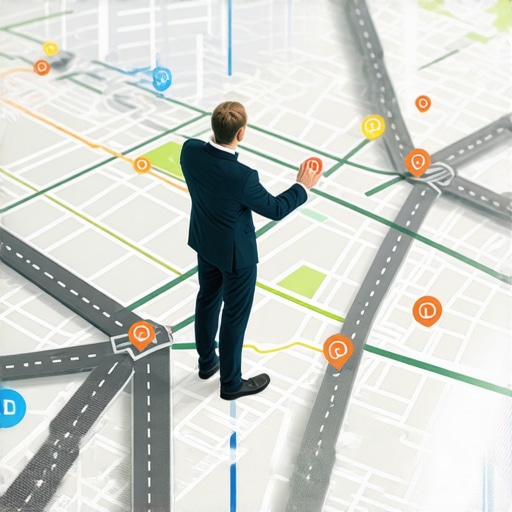
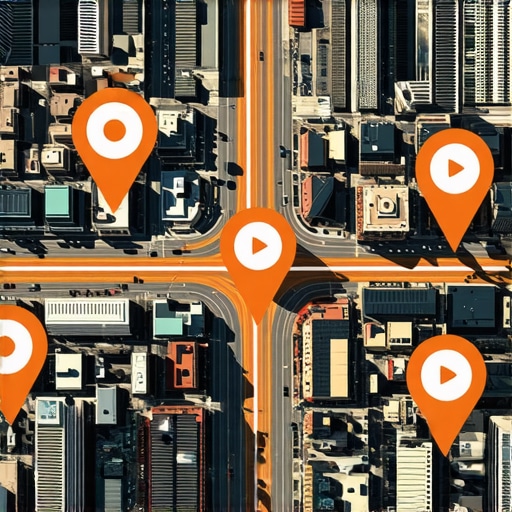
Your competitors are often winning because they have optimized their physical “pin” placement to account for technical drift. Google’s 2026 proximity signal tweaks have made the algorithm more sensitive to where your map pin is actually dropped versus where your legal address is. If your pin is even 50 feet off – perhaps sitting on the back of a large building or near an alleyway rather than the main entrance – Google’s AI may perceive your business as less accessible, leading to “search latency errors” where your profile is skipped in favor of a more “accessible” competitor.
To combat this, you must ensure your pin is placed exactly where the foot traffic enters. This minor adjustment is often The Exact Map Pin Move for Instant Map Visibility in Dense Cities. If you are struggling to track these micro-movements in your rankings, using a professional google maps ranking service can help you visualize exactly where your “ranking bubble” starts and ends.
Overcoming the 2026 Proximity Filter
- Verify Pin Accuracy: Zoom in to the maximum level on Google Maps and ensure your pin is on the front door, not the roof.
- Analyze Your Competitors’ Radius: Use local seo tools to see if your competitors are ranking in areas where you are absent.
- Interaction Signals: Google now uses “verified interaction data” – such as how many people click “Directions” and actually complete the trip – to determine if your location is relevant to a specific neighborhood.
Reason 2: The Review Keyword Gap
Most business owners think that a high volume of five-star reviews is the ultimate goal. While volume matters, the *content* of those reviews is now a primary ranking factor for google business profile optimization. If your competitors are outranking you with fewer reviews, it’s likely because they have a higher density of specific, high-intent keywords within their customer feedback.
AI Justifications and Search Intent
Google’s AI now parses review text to create “justifications.” You’ve seen these: the little snippets under a 3-pack listing that say “Customers say they have the best emergency water heater repair.” If your reviews are generic (“Great service!”, “Friendly staff”), you are missing out on the rank higher on google maps signals that your competitors are capturing.
When a customer leaves a review mentioning a specific service (e.g., “best probate lawyer in downtown”) or a specific product, Google’s Gemini engine flags that profile as highly relevant for those specific long-tail queries. We have seen How Specific Review Keywords Triggered a Quick GBP Boost for Our Clients by simply encouraging customers to mention what they bought or the specific problem the business solved.
The “Old Review” Re-indexing Hack
Another reason your competitors might be ahead is their response strategy. In 2026, responding to reviews isn’t just about customer service; it’s about re-indexing. When you respond to an old review and include relevant keywords naturally, it can trigger a refresh of your profile’s relevance data. This is a core component of any high-level google business profile optimization strategy.
How to Close the Review Gap:
- Prompt for Specifics: Instead of asking for a review, ask: “Could you mention which service we performed today?”
- Keyword-Rich Responses: Don’t just say “Thanks!” Say, “Thanks for choosing us for your [Service Name] in [City Name]!”
- Audit Your Justifications: Look at what the 3-pack competitors have in their snippets and aim to mirror those keywords in your upcoming reviews.
Reason 3: Hyperlocal Authority vs. City-Level SEO
The third reason you’re losing is that you are likely still optimizing for “City, State” while your competitors have moved on to “Neighborhood, Landmark.” In 2026, “City-Level SEO” is considered too broad for the 3-pack. Google’s AI agents now prioritize businesses that demonstrate “Hyperlocal Authority.”
Neighborhood Mentions and AI Filters
If you are a dentist in Chicago, you aren’t just competing for “Chicago.” You are competing for “Wicker Park,” “Logan Square,” or “The Loop.” Competitors who dominate the 3-pack are using neighborhood-specific content. They mention local landmarks, nearby parks, and even specific intersections on their website and in their Google Business Profile updates. This helps them bypass AI filters that skip generic, broad-match businesses.
To win in this environment, you need to implement Win Your Fast 3-Pack Ranking: 4 Neighborhood Map Tactics [2026]. This involves more than just adding a map to your contact page. It requires building “geo-relevance” through local news updates and community involvement signals that Google can verify.
The Power of Local SEO Software
Manually tracking your authority across twenty different neighborhoods is impossible. This is where local seo software becomes essential. These tools allow you to see a heat map of your rankings, showing you exactly which neighborhood you own and where your “Local Lead Lag” begins. If your competitor is using a gmb ranking service to automate their hyperlocal signals, they will consistently outpace your manual efforts.
Hyperlocal Tactics for 2026:
- Create Neighborhood Landing Pages: Don’t just have one “Service Areas” page. Create dedicated pages for each major neighborhood.
- Use Local Landmarks: In your GBP posts, mention your proximity to well-known local spots (e.g., “Just 5 minutes from Central Park”).
- Local Link Building: Get links from neighborhood blogs, local sports teams, or community centers rather than generic national directories.
Reason 4: Technical Signal Decay & NAP Inconsistency
The final reason is often the most overlooked: technical decay. You might have set up your citations three years ago and assumed they were fine. However, NAP (Name, Address, Phone) consistency remains a critical foundational pillar for rank google business profile success. Even a slight variation in how your phone number is formatted can cause a “trust fracture” in Google’s Knowledge Graph.
The Phone Format Trap
Believe it or not, something as simple as using `(123) 456-7890` on your website and `123-456-7890` on a directory can confuse the 2026 AI crawlers. These inconsistencies are a primary reason for ranking blocks. If you want to know more about this specific technical hurdle, read Why Using Different Phone Formats is Blocking Your Fast 3-Pack Ranking. Your competitors are likely using a google business profile audit tool to find and squash these inconsistencies instantly.
Image Metadata: The “Google Maps Quick Fix”
Another technical area where competitors often cheat ahead is image metadata. Every photo you upload to your GBP contains EXIF data. In 2026, Google uses this metadata to verify the “ground truth” of your location. If your photos are stock photos or lack GPS coordinates, you are losing a massive relevance signal. By applying Stop Hiding Your Business with 5 Image Metadata Tweaks for a Google Maps Quick Fix, you can provide the hard data Google needs to trust your business’s physical presence.
Technical Checklist:
- Audit Your Citations: Use a google maps rank tracker to identify where your NAP data is fragmented.
- Geotag Your Images: Ensure all photos uploaded to your profile have embedded GPS coordinates of your actual business location.
- Fix Search Latency: Ensure your website loads in under 1.2 seconds; Google’s 2026 algorithm penalizes GBP profiles linked to slow-loading sites.
Conclusion: Your 2026 Roadmap to the 3-Pack
The Local 3-Pack isn’t a “set it and forget it” achievement. It is a dynamic, AI-driven battlefield where the most technically precise and locally relevant businesses win. If your competitors own the top spots, it’s because they have optimized for the nuances of 2026: they’ve fixed their map pin drift, they’ve harvested keyword-rich reviews, they’ve established hyperlocal authority, and they’ve eliminated technical NAP decay.
Don’t let “Local Lead Lag” stifle your growth. Start by performing a deep audit of your current standing. Use professional-grade SEO Viper Tools to identify your weaknesses and see exactly where your competitors are outmaneuvering you. Whether you choose to do it yourself or hire a google maps ranking service, the time to act is now. The “invisible wall” is only as strong as your lack of data – break through it today and claim your rightful place at the top of Google Maps.